
Reference-guided cartoon character tool
Consistent Cartoon Character AI for Stories and Mascots
When your mascot changes proportions on every page, use one clear reference to keep its silhouette and signature details recognizable.
Live generator. The standard generator accepts one reference image and creates one image per run. Review proportions, markings, palette, clothing, and line treatment before continuing a story sequence.
体验一致性角色生成
当前为预览模式。登录后可上传参考图片并生成你的专属角色。
参考图片(必填)*
建议使用 AI 生成或风格化角色图。真人、名人、品牌 Logo、水印或敏感内容可能被安全审核拦截;失败任务会自动退还积分。
支持 PNG / JPG / WebP,最大 20MB,限 1 张
*生成需要参考图片
角色描述
使用说明
🎨 免费试用
• 第一张图免费(多数地区可用)
• 标准分辨率(1024×1024)
• 支持多姿势与多风格
• 生成需要参考图片
登录后即可上传参考图片并开始使用
生成设置
增强模型,画质与稳定性更好(每次生成 1 张)
1K快速出草稿,适合试想法。
图片预览
选择或生成图片以预览
会话历史 (0)
暂无历史记录
生成后将显示在这里
The design drift problem
Simple-looking characters expose inconsistency quickly
Cartoon identity often depends on fewer shapes than realistic portrait identity. That makes every shape more important. A mascot with a round head, three forehead tufts, one ear notch, and short teal overalls can become a different character when even two of those decisions change.
The silhouette stops matching
Head size, ear length, torso width, and limb proportions can expand or shrink with a new pose. On a picture-book spread, readers notice when the compact sidekick suddenly has the body of the taller lead.
Colors and markings migrate
A cream muzzle turns white, cheek spots vanish, or an ear mark swaps sides. The design remains broadly similar, but it no longer functions as the same reusable mascot asset.
The rendering style changes by scene
Indoor pages may gain thick vector outlines while outdoor pages become soft watercolor. Inconsistent line weight, texture, and shadow complexity can make a book or campaign feel assembled from unrelated sources.
A repeatable character recipe
Treat shape language as identity, not decoration
A consistent cartoon character AI workflow combines a visual reference with a compact written design recipe. The reference carries the overall proportions and appeal. The prompt calls out the small decisions that cannot be allowed to disappear when the setting, emotion, or activity changes.
Start with a readable model pose
Use a clean three-quarter or front view where the full silhouette, facial markings, outfit, and key accessory are visible. A neutral pose usually communicates the design better than a cropped or highly dynamic scene.
Name the shape and color anchors
Record head shape, body proportions, ears, muzzle, markings, palette, clothing, and outline treatment. Include the side of asymmetric details so the ear notch or patch does not jump between frames.
Direct the activity separately
After the fixed recipe, add one clear action and setting. A single readable verb such as reading, planting, biking, or waving gives the composition room to preserve the character.
Scenario board
A fox mascot that can carry a whole series
The continuity target is not a repeated sticker. It is the same appealing fox performing different actions in a library, garden, classroom, and neighborhood while the ear notch, scarf, overalls, fur pattern, and friendly proportions stay legible.
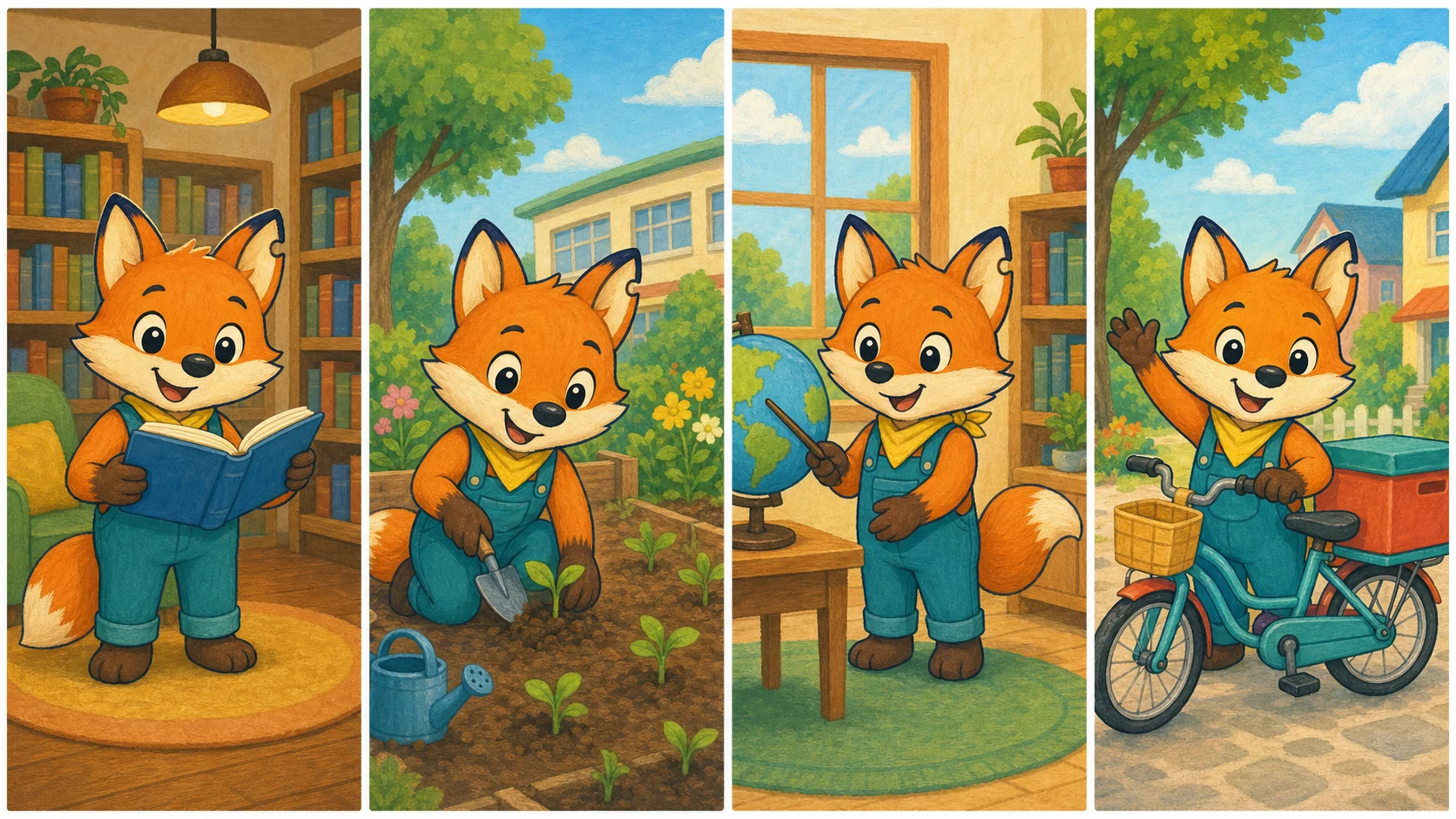
Library story beat
A seated reading pose tests whether short limbs, paw shapes, scarf placement, and muzzle proportions survive a quieter composition.
Garden activity
Props and foliage add visual competition. State the watering action simply and repeat the fur, clothing, and ear-notch anchors before describing the environment.
Classroom expression
A close reaction frame can change eye size and face width. Compare it with the reference instead of accepting the first image that feels generally cute.
Bicycle motion scene
A full-body action pose is a tougher continuity test. Keep the background uncluttered and verify the character before adding supporting figures or extra props.
How it works
Turn one approved cartoon design into a sequence
The tool supports quick browser-based iteration. Your job is to choose a reference that communicates the design, write a stable character recipe, and accept only the frames that actually belong beside one another.
- 01
Upload an approved character reference
Use your strongest model-sheet view, mascot illustration, or clean AI concept. Remove labels and unrelated figures from the crop when possible.
- 02
Describe the non-negotiable details
List species or character type, proportions, palette, markings, outfit, signature accessory, and rendering style in one repeatable sentence.
- 03
Add one page or campaign moment
Specify the action, expression, framing, and setting. Keep secondary props subordinate so the character remains the clearest subject.
- 04
Compare against the model reference
Check silhouette, face markings, color positions, hands or paws, and clothing seams. Download a strong result or revise only the detail that drifted.
Where it fits
Designed for recurring characters with a job to do
Consistency matters when an audience meets the same character repeatedly. The generator can help with concept and production exploration, while final books and brand systems still need editorial review, layout, typography, and sometimes manual cleanup.
For authors, illustrators, and small publishers
Children's book scenes
Explore the same lead across bedrooms, classrooms, parks, and emotional beats. Use a fixed design recipe so each page feels like part of one illustrated world.
For teachers and learning-product teams
Educational characters
Place a familiar guide in lessons, activity sheets, and scenario cards. A stable silhouette helps young learners recognize who is speaking or demonstrating a task.
For marketing and social teams
Brand mascot campaigns
Test seasonal posts, product moments, and reaction images without redesigning the mascot for every brief. Keep official colors and distinguishing marks explicit.
For communities and independent creators
Sticker and reaction packs
Generate expression directions around one base design, then standardize crops, outlines, and export treatment during the final asset-production pass.
Prompt guide
Describe the model sheet before the adventure
Cartoon prompts benefit from exact shape language. Mention a compact body, oversized triangular ears, cream oval muzzle, short limbs, or thick rounded outline when those decisions define the character. Then add the story moment after a period.
Example character recipe plus scene
Same friendly cartoon fox mascot, compact body, oversized triangular ears, tiny notch in the right ear, orange fur, cream oval muzzle, teal short overalls, yellow scarf. Watering sunflowers in a school garden, warm gouache children's book illustration, rounded shapes, clean dark-brown outlines.
- Use local color names before mentioning warm, cool, sunset, or neon lighting.
- Keep the same proportion words in every related prompt.
- Name the side and exact location of patches, notches, pins, and other asymmetric marks.
- Generate the main character alone before introducing side characters or complex props.
The reference improves continuity but cannot guarantee identical geometry in every pose. Tiny markings, fingers, patterned clothing, and intricate props are common places to inspect, regenerate, or correct manually.
Consistent cartoon character AI questions
Use these answers to set up a practical cartoon, mascot, or picture-book workflow.
How can I keep a cartoon character consistent across pages?
Reuse one approved reference and the same written character recipe. Include silhouette, body proportions, fur or skin colors, facial markings, outfit, signature accessory, and outline or paint style. Change the action and setting after that fixed block, then compare each result with your model reference.
Can I use this for a children's book character?
Yes. It can help explore a recurring original character across page situations and expressions. For a finished book, plan for human selection, layout, typography, continuity review, accessibility considerations, and manual corrections where hands, props, or small design details drift.
What makes a good cartoon reference image?
A clean front or three-quarter image with one character, a readable full silhouette, visible facial marks, and clear clothing colors works well. Avoid tiny screenshots, busy group scenes, speech balloons, text overlays, watermarks, and poses that hide the character's defining shapes.
Can the mascot have different expressions and poses?
Yes. Change the expression or pose while keeping the design recipe stable. Start with simple gestures, then move to larger actions. If the head shape or markings drift during a strong expression, reduce the intensity, restate the fixed traits, and try another run.
How do I keep the same illustration style?
Use one short, repeatable style phrase that describes medium, outline, shape language, and shading. For example, warm gouache children's book illustration, rounded shapes, clean dark-brown outlines, and minimal soft shading. Avoid stacking several conflicting artist or medium references.
Is the consistent cartoon character AI free to try?
New users in most regions receive free credits after signing up. The standard tool uses one credit for one image. Check the balance displayed in the generator and the current pricing page because offers, availability, and included credits may change.
Can I use a generated mascot commercially?
Commercial use depends on your plan and the current Terms of Service. Check those terms before publishing. You must also have the necessary rights to the reference image and avoid copying protected characters, logos, trade dress, or other third-party intellectual property.
Explore the toolkit
Continue from the main generator or choose a focused workflow
Keep the mascot recognizable from page to page
Upload the approved design, write its shape-and-color recipe once, and direct the next story moment without starting over.
Start with your cartoon reference