
Reference-guided realistic character tool
Consistent Realistic Character AI Without the Face Drift
When a new camera angle turns your fictional lead into someone else, anchor the next scene with one clear reference image.
Live generator. Use fictional adults or images you have permission to use. The standard generator uses one reference and one prompt per run, and results should be reviewed for identity, anatomy, texture, and context.
体验一致性角色生成
当前为预览模式。登录后可上传参考图片并生成你的专属角色。
参考图片(必填)*
建议使用 AI 生成或风格化角色图。真人、名人、品牌 Logo、水印或敏感内容可能被安全审核拦截;失败任务会自动退还积分。
支持 PNG / JPG / WebP,最大 20MB,限 1 张
*生成需要参考图片
角色描述
使用说明
🎨 免费试用
• 第一张图免费(多数地区可用)
• 标准分辨率(1024×1024)
• 支持多姿势与多风格
• 生成需要参考图片
登录后即可上传参考图片并开始使用
生成设置
增强模型,画质与稳定性更好(每次生成 1 张)
1K快速出草稿,适合试想法。
图片预览
选择或生成图片以预览
会话历史 (0)
暂无历史记录
生成后将显示在这里
The realism problem
Photorealism makes small identity errors feel larger
A realistic character is recognized through the relationship between many subtle features. Eye spacing, cheek volume, nose bridge, jaw, age cues, skin tone, hairline, and expression all work together. When a generator changes two or three at once, a polished picture can still depict the wrong person.
Lighting changes the apparent identity
A studio portrait may match the reference, then hard side light or night photography alters skin tone, face width, and age. The scene looks plausible but no longer belongs to the same visual narrative.
Beauty treatment erases character
Over-smoothing can remove freckles, pores, smile lines, or a cleft chin. Generic beauty language often pulls the face toward a polished average and away from the distinctive fictional design.
Hair and age drift between shots
Hair length, parting, color, and volume can change with motion or wardrobe prompts. The same character may also look ten years younger in one image and older in the next.
A grounded reference workflow
Preserve distinguishing features before directing the camera
The consistent realistic character AI uses a reference to establish a visual baseline. The prompt then reinforces features that should remain recognizable while separately describing lens, crop, action, wardrobe, location, and light. That separation makes visual review much more practical.
Choose a neutral, detailed reference
Use an adult fictional character with a clear face, natural expression, even light, and enough resolution to show distinctive features. Avoid filters, deep shadows, heavy blur, and strong perspective as the only source image.
Write observable identity anchors
Name hair cut and parting, eye color, age range, skin tone, freckles or moles, face shape, and a stable accessory. Observable details work better than broad judgments such as attractive or cinematic.
Specify natural photographic treatment
If realism matters, request realistic skin texture, restrained retouching, coherent light, and a plausible lens or framing. Keep style directions consistent across the series so one frame does not become glossy advertising and the next gritty reportage.
Scenario board
The same fictional adult across four photographic contexts
A useful test moves beyond repeated headshots. The continuity goal is a copper-haired character who remains recognizable in a neutral studio, a warm cafe, a wet city crosswalk, and a windy coast while expression, lens distance, wardrobe movement, and light change.
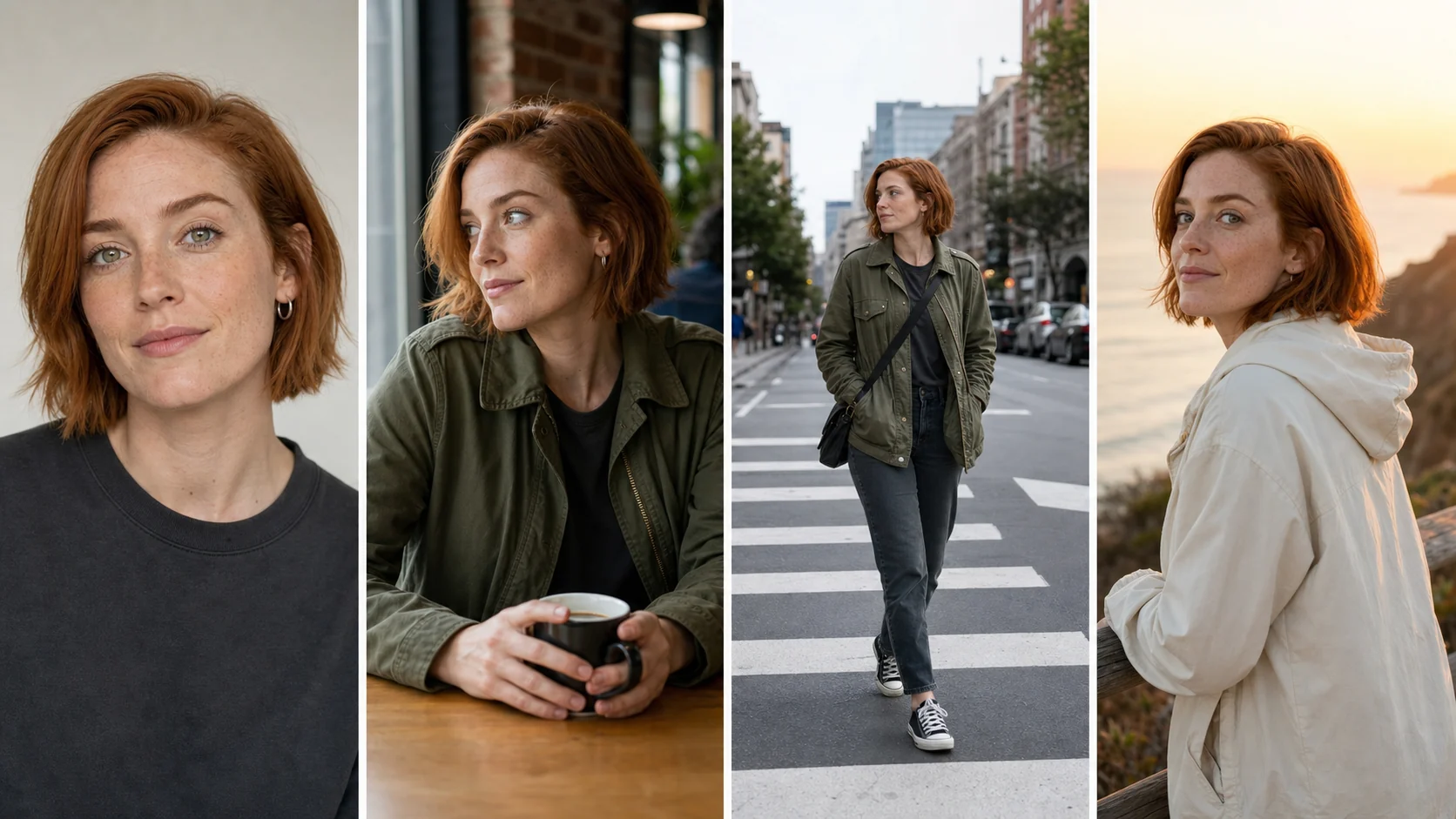
Neutral identity baseline
Begin with soft even light and a medium portrait. Confirm the hairline, eye spacing, freckles, jaw, age, and earrings before testing more difficult scenes.
Warm indoor light
Cafe light can shift skin and hair color. State the local copper hair and natural skin tone first, then describe the warm environmental illumination.
Full-body city motion
A wider crop reduces facial detail and adds anatomy challenges. Keep the action ordinary, use a believable lens, and inspect the result at full size.
Wind and outdoor weather
Moving hair can obscure the parting and face shape. Preserve the cut, length, and color in the identity clause even when the wind changes its silhouette.
How it works
Create a realistic scene without losing the fictional lead
This is a generate-and-review workflow, not biometric verification. Use a permitted reference, make a focused change, inspect the result, and retain only images that meet your visual and ethical requirements.
- 01
Upload a clear permitted reference
Choose an original fictional adult or an image you have the right and consent to use. The face should be visible, in focus, and not covered by text or a watermark.
- 02
Record the stable identity details
Write the age range, face shape, hair cut and color, eyes, skin features, and small accessories. Keep this sentence unchanged across the series.
- 03
Direct one believable photograph
Add the pose, wardrobe, setting, time of day, lens, crop, and lighting. Avoid combining too many difficult changes in the first generation.
- 04
Inspect at full resolution
Check identity, hands, teeth, jewelry, fabric, reflections, background context, and skin texture. Revise the prompt or scene if the image looks polished but inconsistent.
Responsible applications
For original fictional people who need a coherent visual life
The tool can support ideation and content development for invented adults. It should not be used to impersonate, sexualize, defame, or deceive with a real person. Always consider disclosure and audience context when publishing realistic AI imagery.
For transparent character-led channels
Fictional creator personas
Plan a disclosed virtual persona across home, travel, work, and event scenes while keeping their age, facial traits, hair, and wardrobe language coherent.
For brand and creative teams
Lifestyle campaign concepts
Explore an original campaign character in different environments before production. Treat outputs as concepts and complete legal, brand, and representation review before use.
For directors and pitch designers
Film and advertising storyboards
Keep a fictional lead readable through coverage changes so clients can follow the sequence. The goal at this stage is communication, not replacing final casting or photography.
For writers and world builders
Narrative profile series
Illustrate one invented adult at different moments in a story, from a quiet portrait to an outdoor action, without recasting the role in every image.
Prompt guide
Trade generic beauty words for visible evidence
A realistic identity prompt should sound like a concise continuity note. Name features another person could compare: copper chin-length bob, center-left part, green-gray eyes, light freckles, subtle cleft chin, small silver hoops, and early thirties. Then direct the photograph.
Example identity plus photography prompt
Same fictional adult woman in her early thirties, copper chin-length bob with a center-left part, green-gray eyes, light freckles across the nose, subtle cleft chin, small silver hoop earrings. Walking through a city crosswalk after rain, candid three-quarter view, natural documentary photography, realistic skin texture, restrained retouching, 50mm lens.
- Use a stable age range and avoid words that implicitly make the person younger or older.
- Name permanent skin details and ask for natural texture if over-smoothing removes them.
- Keep lens, color treatment, and retouching language consistent across a campaign.
- Change pose or lighting first, then add a major wardrobe change in a later run.
The output is generative and is not proof of identity or authenticity. Do not rely on it for legal identification, and do not create deceptive or nonconsensual depictions of real people.
Consistent realistic character AI questions
These answers cover both practical consistency and responsible use of photorealistic character imagery.
How do I keep the same realistic AI character across scenes?
Reuse one clear reference and a fixed sentence describing age range, face shape, hair cut and parting, eyes, skin tone, distinctive features, and accessories. Put the new pose, wardrobe, setting, lens, and lighting after that identity block. Compare every result at full size before continuing.
Why does my realistic character look younger or older?
Lighting, skin smoothing, expression, makeup, hairstyle, and words such as youthful or mature can all shift apparent age. State a stable adult age range, request natural skin texture and restrained retouching, and avoid conflicting beauty language. Softer scene changes are easier to stabilize first.
What reference photo works best for realistic consistency?
Use a sharp, evenly lit image with one fictional adult, a clear face, natural expression, and visible hairline. Avoid beauty filters, heavy color grading, sunglasses, deep shadows, extreme perspective, and low-resolution crops. Only upload images you have the right and consent to use.
Can I change outfits and locations?
Yes. Keep permanent facial and hair anchors unchanged, then describe the new clothing and setting precisely. If both a dramatic wardrobe and difficult camera move cause drift, establish one change first and use the accepted result as the visual baseline for the next scene.
Can I generate a real celebrity or another person?
Do not use the tool for nonconsensual, deceptive, defamatory, sexual, or otherwise harmful depictions of real people. The acceptable-use rules prohibit impersonation and harmful deepfake-style content. Prefer original fictional adults and obtain permission for any real-person source image.
Is the consistent realistic character AI free to try?
New users in most regions receive free credits after signup. The standard generator uses one credit for one image. Check the current balance in the tool and the pricing page because regional availability, promotions, and included amounts can change.
Can realistic AI character images be used commercially?
Commercial use depends on your plan and the current Terms of Service. Review both before publishing. You remain responsible for consent, publicity and privacy rights, reference-image rights, trademarks, copyrighted material, disclosure requirements, and the laws that apply to your use.
Explore the toolkit
Continue from the main generator or choose a focused workflow
Direct a new scene without quietly recasting the lead
Start with a permitted fictional reference, describe observable identity anchors, and make one controlled photographic change.
Start with your realistic reference